


The company Consumer Insight Consulting offers specialized training sessions, workshops, and sensory testing delivered in a dedicated format – directly at the Client’s premises.
The training programs are designed for all individuals involved in sensory analysis and its practical application in product development and business decision-making.
In particular, the offer is dedicated to: management staff, food technologists, marketing teams, quality departments, in-house laboratories, sales professionals, and production staff – in other words, anyone who has a real impact on product quality and its market success.
QUICK CONTACT

SENSORY TRAINING I: Fundamentals of the sensory analysis
Sensory Training I covers key topics in the field of sensory analysis, combined with practical exercises that develop participants’ sensory perception. The program has been designed to introduce participants to the world of organoleptic product evaluation in a structured and accessible way.
The objective of the training is to build a solid foundation in terminology, methods, and the application of sensory research in business practice – particularly in product development and quality assessment.
Who is it for:
Management staff, food technologists, marketing teams, quality departments, in-house laboratories, sales professionals, and production staff – in other words, all individuals involved in sensory analysis and product development.
Training scope:
- Fundamentals of sensory analysis – definitions and terminology
- Principles of sample preparation and conducting sensory tests
- Factors affecting the reliability of results
- Recruitment and validation of a sensory panel
- Basic sensory analysis methods and their applications
- Principles of proper sensory tasting
- Product testing planning – integration of sensory and consumer research
Group size:
8–15 participants (on-site training at the Client’s location)
Duration:
5 hours of intensive workshops
Sensory Training I
A foundational training in sensory analysis, combining theory with practical product evaluation exercises. Participants will learn key sensory concepts, principles of conducting research, and basic methods used in assessing product quality in the food, FMCG, and cosmetics industries.

SENSORY TRAINING II: Application of sensory techniques in food products’ evaluation
The training covers advanced topics related to sensory analysis methods used in the evaluation of food products, enriched with intensive practical exercises. The program focuses on developing competencies in proper study design and interpreting results in both business and quality contexts.
The training is intended for individuals working with sensory analysis and its practical application, particularly food technologists,
marketing teams, quality department staff, in-house laboratories, and production personnel.
During the training, participants will learn:
- basic principles of preparing and conducting sensory evaluations
- sensory methods used in food product evaluation – examples and applications
- principles of interpreting results for selected sensory analysis methods:
- difference tests – triangle test, paired comparison, duo-trio test
- scoring method
- ranking method
- scaling method
- receive practical guidelines for conducting studies using specific methods
- participate in hands-on exercises using selected sensory methods
Training format
Groups of 8–12 participants at the Client’s location
Duration
6 hours
Sensory Training II
An advanced sensory analysis training covering methods for evaluating food products, combined with practical exercises that enable participants to consciously design and interpret sensory studies in a business environment.

SENSORY WORKSHOP: Fundamentals of the sensory analysis & the verification of sensory sensitivity
Sensory workshops are an extended version of SENSORY TRAINING I.
They include both a theoretical part, covering fundamental aspects of sensory science combined with sensory exercises, as well as an expanded practical component.
The practical part is further enhanced with sensory tests, including verification tasks completed with an individual assessment of each participant, as well as a group sensory tasting session.
The objective of the workshops is not only to familiarize participants with sensory concepts and terminology, but also to assess their sensory abilities and introduce and reinforce the principles of proper sensory evaluation during tasting.
There is also the possibility to tailor the workshops to the individual needs of the Client.
The workshops are intended for all individuals involved in sensory analysis and its application, particularly management staff, food technologists, marketing teams, quality department staff, in-house laboratories, sales professionals, and production employees.
During the workshops, participants will learn:
- fundamentals of sensory analysis, definitions, and terminology
- principles of conducting sensory studies and sample preparation
- factors affecting the reliability of results
- principles of recruiting and verifying a sensory panel
- basic sensory analysis methods and their applications
- principles of proper sensory tasting
- product testing planning – combining sensory and consumer research
Additionally, participants will:
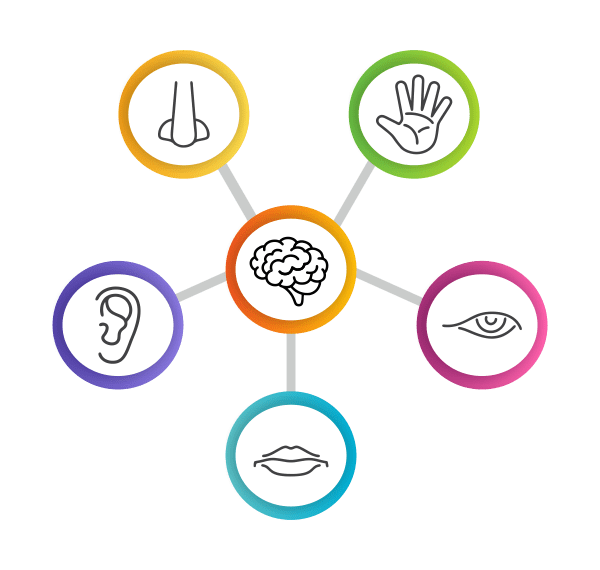
- undergo sensory verification in terms of taste, smell, touch, and visual perception
- independently conduct proper sensory evaluations of 3 to 5 products in accordance with the principles learned during the theoretical part
Workshops format
Groups of 8–12 participants at the Client’s location
Duration
approximately 6 hours
Sensory Workshops
Comprehensive sensory workshops combining theory, practice, and sensory testing, enabling participants not only to learn the principles of sensory analysis but also to verify their actual perceptual abilities and apply them in a business context.

SENSORY WORKSHOPS II: Mastering Organoleptic Product Evaluation
Sensory Workshops II are advanced practical workshops focused on improving organoleptic product evaluation and on verifying and developing participants’ sensory sensitivity.
The training is highly practical in nature (approx. 90% workshop-based) and is built around work on real products – both in-house and competitor products – allowing direct translation of results into business decisions.
Sensory Workshops II are dedicated to R&D, QA, marketing, laboratory, and production teams responsible for product quality and development within an organization.
Key benefits:
- improved organoleptic product evaluation and more precise decision-making
- verification of participants’ individual sensory sensitivity
- standardization of product evaluation approaches across the organization
- work on real products with immediate business value
- reduced risk of incorrect product decisions
Business value:
Correct sensory evaluation is crucial at every stage of the product lifecycle – from development, through testing, to quality control.
It helps companies better align products with consumer expectations, increase quality consistency, and respond faster to market changes.
Lack of sensory competencies leads to incorrect product decisions, quality decline, and loss of competitive advantage.
Therefore, the workshops help standardize evaluation practices and base decisions on objective data.
Summary:
Sensory Workshops II are a tool for real impact on product quality and development – building expert competencies, increasing team alignment, and enabling more accurate product decisions within the organization.
Sensory Workshops II
Advanced practical workshops focused on improving organoleptic product evaluation and on verifying and standardizing the sensory sensitivity of teams.
The training is largely based on work with real products, enabling direct translation of results into quality, marketing, and product decisions.

SENSORY MARKETING
Sensory marketing is a field that combines knowledge of consumer sensory perception with the practice of building products, brands, and market communication. The training shows how to use sensory analysis and consumer insights to create more attractive and effective products.
The program is designed for individuals responsible for product development and brand communication, in particular specialists and managers in marketing, R&D, quality, sales, and product teams in the FMCG and food industries.
During the training, participants will learn:
- the role of senses in consumer purchasing decisions
- the impact of sensory perception on product and brand perception
- applications of sensory marketing in FMCG product development
- use of sensory research in marketing strategy
- examples of effective sensory branding activities
Additionally, participants will:
- learn how to combine sensory data with marketing decisions
- discover practical examples of sensory science in business
- gain tools for building a product’s competitive advantage
Training format
Groups of 8–12 participants at the Client’s location
Duration
6 hours
Sensory Marketing in Business Practice
Combine knowledge of consumer perception with real marketing decisions.
Learn how to use sensory marketing and sensory research to build stronger products and brands.

Training – Consumer Research in the Food Industry
Consumer Research in the Food Industry is a practical training dedicated to the design, execution, and interpretation of consumer research in the FMCG and food sectors.
The training focuses on how to use consumer research data to make accurate product, marketing, and quality decisions. Participants work on real market examples, learning how to connect consumer insights with product development.
The program is designed for R&D, marketing, quality, sales teams, and individuals responsible for product development in the food and FMCG industries.
Key benefits:
- better understanding of consumer needs and behaviors
- ability to design effective consumer research studies
- interpretation of research results in a business context
- combining qualitative and quantitative data in decision-making
- reduced risk of unsuccessful product decisions
Business value:
Consumer research is a key element of the product development process – it reduces market risk and enables data-driven rather than intuition-based decisions. It helps companies better align products with market expectations and improve launch effectiveness.
Improper use of consumer research leads to incorrect product assumptions, financial losses, and lower effectiveness of marketing and sales activities.
Summary:
The training helps structure knowledge in consumer research and translate it into practical business decisions, supporting product development and building competitive advantage in the FMCG market.
Better Product Decisions Through Consumer Research
Put consumer research into practice and make data-driven, not intuition-based decisions.
Understand real consumer needs and increase the effectiveness of your products in the FMCG market.

SENSORY TESTS: Verification of the sensory sensitivity
Sensory tests: Sensory sensitivity verification are dedicated studies conducted on request, aimed at assessing the individual sensory sensitivity of participants under controlled conditions.
After the tests are completed, a detailed summary of group results is prepared, along with an individual sensory assessment for each participant and development recommendations.
Conducting sensory tests is recommended for all individuals involved in sensory analysis and its application, as well as those responsible for product launch and quality control during production processes.
The studies are particularly recommended for food technologists, marketing teams, quality departments, in-house laboratories, and production staff involved in sensory evaluation.
Testing format
Groups of 8–12 participants at the Client’s location
Duration
approximately 3 hours
Sensory Tests
Discover how professional sensory analysis and sensory sensitivity testing can significantly improve product quality, technological decisions, and the effectiveness of new product launches on the market.
Training Reviews
“The sensory workshops were conducted in a highly professional and engaging manner and received excellent feedback from my R&D team. The high teaching and substantive quality of Ms. Agata Markiewicz, as well as her flexibility and communication with training groups, were greatly appreciated.”
“I had the pleasure of participating in sensory tests conducted by Ms. Agata Markiewicz. I value this experience because it allowed me to professionally identify my strengths and weaknesses in sensory sensitivity. The knowledge and awareness I gained provided me with strong support in my decision-making process.”
“The content and agenda of the sensory workshop were tailored to Unilever’s needs and expectations. Participants highly appreciated the expert knowledge, communication style, competencies, and instructional skills of the trainer.
Ms. Agata Markiewicz is considered a professional business partner with strong experience in the food industry. Her expertise in sensory analysis, passion for her work, and deep understanding of consumer trends are the best recommendations for her future projects.”
“I would like to thank Consumer Insight Consulting for their cooperation. As part of the agreement, the company delivered sensory training. Ms. Agata provided a high-quality service executed in an exemplary manner. The scope of the training was perfectly matched to my needs. I will definitely use Consumer Insight Consulting services again to expand my knowledge of CTI.”
“Professional presentation supported by hard data combined with demanding sensory tests. I would recommend it to all newcomers in the food industry to calibrate their senses and match proper testing techniques with business needs. All basics of sensory testing and techniques in a nutshell plus live training of evaluation session execution.”
“I had the chance to attend a mini sensory training with Agata. She is very professional and the training was very insightful and interesting! I recommend it, especially for those working in the food category.”
“The training was delivered according to the schedule, and Ms. Agata Markiewicz proved to be a reliable and professional training organizer. She demonstrated high knowledge and competence in the subject area, and her way of presenting topics deserves recognition. She also showed great openness and willingness to answer questions and clarify doubts raised during the training.”
“The training was prepared in a professional manner, and the supporting materials were highly appreciated by participants. The introduction of sensory sensitivity verification elements and workshops helped reinforce the acquired knowledge.
We highly recommend Consumer Insight Consulting and Ms. Agata Markiewicz as a competent partner in sensory analysis training in the food industry.”
Enhance Your Team’s Skills with Sensory Analysis and Consumer Research Training
Increase the effectiveness of product decisions, improve the quality of sensory evaluations, and teach your team how to work with data through practical training delivered by Consumer Insight Consulting experts.
Sign up for open training sessions
Join practical workshops in sensory analysis and consumer research.
Develop your team’s competencies and make better product decisions based on data.