



What Are Sensory Tests and Why Are They Important?
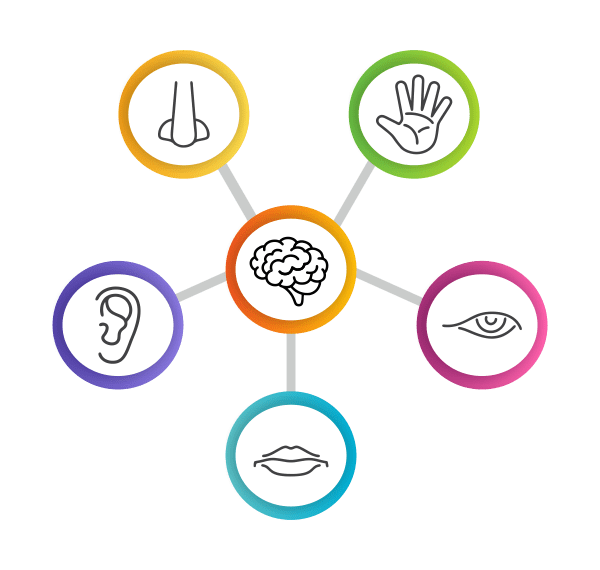
Product sensory testing is the process of evaluating products using the senses:
taste, smell, sight, touch, and hearing. It is a crucial part of product development in the FMCG sector—especially for food, beverages, and cosmetics, where consumer experience directly impacts purchasing decisions.
Sensory testing helps companies answer one of the most critical business questions:
does the product truly meet consumer expectations?
It allows businesses to understand how consumers actually perceive a product—not just through declarations, but through real experience. This creates a strong advantage over decisions based purely on intuition or internal opinions.
Implementing sensory testing means moving from a “we think” approach to a data-driven strategy based on real consumer insights.
Sensory testing enables companies to:
- Optimize taste, aroma, and visual appeal
- Tailor products to target consumer preferences
- Benchmark against competitors
- Predict market reactions before launch
- Increase customer satisfaction and loyalty
As a result, companies can create products that not only meet quality standards but also truly resonate with consumers.
How Do Sensory and Consumer Tests Work?
Product sensory tests can be conducted in controlled laboratory environments or in natural settings, such as consumers’ homes.
The choice depends on the research objective. Laboratory tests provide greater control over variables, while home-use tests better reflect real consumer behavior.
A typical process includes:
- Designing the study and selecting the methodology
- Defining the target group and recruiting participants
- Preparing product samples
- Conducting consumer tests (tasting, evaluation, sensory analysis)
- Collecting data (surveys, rating scales, feedback)
- Analyzing results and identifying key insights
Example: a beverage test may reveal that the taste is too intense for a target group, the aroma is not appealing, and the packaging fails to communicate product quality.
The key is not only collecting data, but interpreting it correctly in the context of the market, competition, and brand strategy.
Business Benefits of Sensory Testing
Implementing consumer and sensory testing directly impacts business performance and market effectiveness.
Key benefits include:
- Better product-market fit. Products aligned with real consumer needs drive higher sales and fewer returns
- Reduced business risk. Lower risk of launching unsuccessful products
- Faster decision-making. Clear data replaces internal debates
- Stronger marketing. Insights support more effective communication
- Competitive advantage. Better products win on the shelf
Sensory testing is particularly valuable during product development, as well as for optimization and repositioning.
Why Work With a Consulting Partner?
While sensory testing is highly valuable, its full potential is realized only when results are properly interpreted and translated into actionable decisions.
More companies are choosing partners who coordinate the process and support business decision-making.
Consumer Insight Consulting supports companies end-to-end—from research design to implementation—combining research, strategy, and business execution.
- Selecting the right research methodology
- Coordinating research providers
- Ensuring data quality
- Analyzing results in market context
- Turning insights into decisions
- Supporting R&D and marketing teams
- Providing training
This approach gives companies one consistent partner instead of multiple vendors.
The key value is not the data itself—but how effectively it is used.
FAQ – Frequently Asked Questions
How much do sensory tests cost?
Costs depend on scope, sample size, and methodology. A consulting model helps align research with budget.
How long does a sensory test take?
Typically from a few days to several weeks.
Can small companies use sensory testing?
Yes—studies can be scaled to fit smaller businesses and startups.
Can teams learn sensory testing internally?
Yes—training helps teams use data effectively.
What is the difference between sensory and consumer testing?
Sensory testing focuses on perception through senses, while consumer testing includes emotions, preferences, and behavior.
Summary
Sensory and consumer testing are among the most effective tools for product development.
With a consulting model, you gain:
- Access to validated research
- Clear business recommendations
- Implementation support
- Team capability development
Want to improve your product and make better decisions?
Contact us via consumer-insight.pl and see how
Consumer Insight Consulting can turn data into real results.
Sensory Testing in Your Organization
Do you want to create products that truly match consumer preferences?
Sensory testing helps you make decisions based on real user experiences—not intuition—reducing risk and increasing the effectiveness of product launches.
Get in touch to choose the right approach—from sensory and consumer testing, through product optimization, to results interpretation and implementation of recommendations.
You can also strengthen your team’s capabilities by joining our industry training programs.