


SENSORY WORKSHOP II: IMPROVEMENT IN ORGANOLEPTIC EVALUATION OF PRODUCTS

Sensory Workshops II
Advanced hands-on workshops – improving organoleptic product evaluation and verifying sensory sensitivity.
Quick Overview
About the Training
Sensory Workshops II “Improving Organoleptic Product Evaluation”
is an advanced practical training focused on developing product sensory evaluation skills and enhancing participants’ competencies in quality analysis.
The training consists of up to 90% practical sessions, allowing participants to work with real products—either their own or competitors’—to improve quality and make more accurate business decisions.

Business Value
The ability to perform accurate organoleptic evaluation is crucial at every stage of a product’s lifecycle – from concept and development, through consumer testing, to quality control and product optimization in the market.
Sensory analysis enables companies to better align products with consumer expectations, identify competitive advantages, and increase the effectiveness of product-related decisions.
In practice, this means lower risk of unsuccessful product launches, better alignment with target segments, and greater consistency in quality across production batches.
Companies that consciously leverage sensory analysis can respond faster to market changes and develop their product portfolios more effectively.
Errors in sensory evaluation may lead to incorrect product decisions, declining quality, product inconsistencies, and ultimately loss of customers and brand reputation.
This is why it is essential for those responsible for evaluation to have the right competencies, experience, and verified sensory sensitivity.
The workshops help structure the evaluation process, standardize approaches within the organization, and base decisions on objective data rather than subjective opinions.
Key Benefits of the Training
The one-day workshop is designed so that participants can immediately apply the acquired knowledge to business practice and real product decisions.
- Improved organoleptic evaluation skills – greater precision and repeatability of results
- Verification of individual sensory sensitivity – better role alignment within teams
- Work with real products (own or competitors’) – direct business value
- Immediate practical application – no “dead theory”
The outcome of the training is a more conscious, consistent, and effective product decision-making process within the organization.
Why It Matters
In many organizations, product-related decisions are still based on subjective impressions, lack of consistent standards, or limited sensory knowledge.
- Errors in sensory evaluation = errors in product decisions
- Lack of competence = decline in product quality
- Incorrect evaluation = loss of competitive advantage
In the long term, this leads to higher costs, lower implementation effectiveness, and loss of market position.
The workshops eliminate these risks through a practical approach, standardized evaluation processes, and individual participant assessment, enabling companies to act faster, more accurately, and more consciously.

Training Program – Workshop Agenda
1
Sensory tests with individual participant assessment
Participants take part in professionally designed sensory tests that allow for an objective evaluation of sensory sensitivity. Each participant receives individual feedback identifying strengths and areas for improvement. This provides the organization with a real picture of team competencies in the field of sensory analysis.
2
Refresher on tasting principles
Standardizing and aligning the approach to product evaluation. Participants revisit key tasting principles that influence the repeatability and reliability of sensory results. This element helps minimize errors caused by subjective interpretation and builds a shared evaluation standard within the organization.
3
Joint sensory tasting / organoleptic evaluation tailored to the client’s needs
A key part of the workshop where participants work with real products from the client or competitors. The analysis includes comparison, quality evaluation, and identification of sensory differences that directly impact product and marketing decisions. As a result, the company gains practical insights ready for immediate implementation.
The agenda is customized individually with the client, depending on organizational needs, business goals, and product specifics.
Suggested workshop duration: 4 to 6 hours. The program can be adjusted to best support product decisions, quality, and portfolio development.
Case study
The cooperation with BRACIA URBANEK is an example of long-term development of sensory competencies within a production organization. Our relationship began in 2019 with the first implementation of Sensory Workshops I, which became the foundation for building a shared language of product evaluation and increasing sensory awareness across teams.
The next stages of cooperation took place in 2022, when sensory workshops were again delivered to further develop the competencies of R&D and quality teams. In 2025, the collaboration was expanded to a more advanced level.
In response to the growing needs of the organization, Sensory Workshops II were introduced for advanced participants, aimed at further improving the precision of organoleptic evaluation, standardizing sensory language, and developing expert competencies in product analysis.
As emphasized by Beata Szumicka, Quality Department Manager at BRACIA URBANEK:
“We are pleased to recommend cooperation with Consumer Insight Consulting in the field of sensory training workshops.
Employees of our company have once again participated in closed trainings conducted by Ms. Agata Markiewicz.
The training sessions were highly engaging, encouraging active participation, and the training materials were well prepared and provided a solid substantive foundation.
The trainer’s practical knowledge, communication skills, professionalism, and engagement were highly appreciated by participants.
In our opinion, the trainings significantly improved the competencies and knowledge of our employees.
We can confidently recommend Consumer Insight Consulting as a competent training partner.”
Łowicz, April 19, 2022
Results of the cooperation
- Gradual development of sensory competencies from basic to advanced level
- Implementation of organoleptic evaluation standardization in quality and development processes
- Improved accuracy of product decisions thanks to more precise product evaluation
- Expansion of expert team competencies through the introduction of Sensory Workshops II
- Strengthening cross-departmental communication and a shared sensory language
Business conclusions
The case of BRACIA URBANEK demonstrates that the development of sensory competencies should be a continuous process rather than a one-off training event.
The transition from Sensory Workshops I to Sensory Workshops II enabled the organization not only to maintain quality but also to further improve it and build internal sensory experts.

Dlaczego my?
- Sprawdzone doświadczenie w analizie sensorycznej i biznesiePonad 20 lat praktyki w pracy z produktami FMCG, kosmetycznymi i konsumenckimi. Łączymy wiedzę naukową z realnymi wyzwaniami rynkowymi — od rozwoju produktu po podejmowanie decyzji biznesowych, które wpływają na końcowy sukces produktu.
- 90% praktyki – realne testy i degustacjeSzkolenie opiera się na intensywnych ćwiczeniach praktycznych. Uczestnicy pracują na rzeczywistych produktach, wykonują testy sensoryczne i uczą się poprzez działanie, a nie teorię. To doświadczenie, którego nie da się zastąpić kursem online.
- Indywidualna ocena każdego uczestnikaKażdy uczestnik otrzymuje szczegółową informację zwrotną dotyczącą swojej wrażliwości sensorycznej. Dzięki temu możliwa jest realna ocena kompetencji oraz świadome wykorzystanie mocnych stron w pracy zespołowej.
- Dostosowanie do produktów klienta i realnych wyzwań biznesowychPracujemy na produktach klienta lub benchmarkach rynkowych, dzięki czemu szkolenie bezpośrednio przekłada się na codzienne decyzje produktowe. Program jest zawsze dopasowany do kategorii, rynku i celów strategicznych firmy.
- Tworzenie wspólnego języka sensorycznego w zespołachJednym z kluczowych efektów szkolenia jest budowa spójnego języka opisu produktu, który łączy działy R&D, jakości i marketingu.
Eliminuje to nieporozumienia i znacząco przyspiesza proces podejmowania decyzji. - Natychmiastowa aplikacja w procesach biznesowychWszystkie techniki i narzędzia można wdrożyć od razu po szkoleniu. Uczestnicy wychodzą z gotowymi metodami oceny produktów, które wspierają codzienną pracę zespołów i poprawiają jakość decyzji produktowych.
FAQ
How do Sensory Workshops II differ from Sensory Training I?
Sensory Workshops II are advanced and focus on enhancing evaluation skills and verifying individual sensory sensitivity.
Sensory Training I introduces the basics and builds foundational knowledge, but does not include such in-depth practical work or individual participant assessment.
Is the training suitable for beginners?
No – prior completion of Sensory Training I or basic experience in sensory analysis is recommended.
How practical are the workshops?
The workshops are highly practical – around 90% of the time is dedicated to exercises, sensory tests, and product-based work, including results analysis and discussion.
Can we work on our own products?
Yes – the workshops can be conducted on client products or competitor products, enabling direct business insights.
Do participants receive individual evaluation?
Yes – each participant receives an individual sensory sensitivity assessment, helping to better assign roles in product evaluation processes.
How many participants should attend the training?
The optimal group size is 8–12 participants, ensuring high interactivity and individual work with each participant.
Where does the training take place?
The training is delivered as a closed workshop – either at the client’s premises or at an agreed location tailored to organizational needs.
Will we receive recommendations after the training?
Yes – participants and the organization receive practical insights and recommendations that can be directly implemented in quality and development processes.
⭐ Selected Client Testimonials
“This training brought a new level of rigor and consistency to our product evaluation process.”
“Thanks to a shared sensory language, our teams make decisions faster and collaborate more effectively.”
“The practical sensory exercises immediately translate into better product quality and greater decision confidence.”


Reserve Your Spot for Sensory Workshops II
Support the development of advanced sensory competencies in your team and improve the precision of organoleptic product evaluation.
BUILDING AND TRAINING INTERNAL PRODUCT EVALUATION TEAMS
or request a training tailored to your organization
Improve the quality of product decisions through advanced sensory analysis
The training course is intended primarily for all persons involved in sensory analysis and its application, and in particular for management staff, food technologists, marketing employees, quality department, factory laboratories, sales representatives and employees involved in organoleptic evaluation of products in production plants.
During the Sensory Workshops II participant:
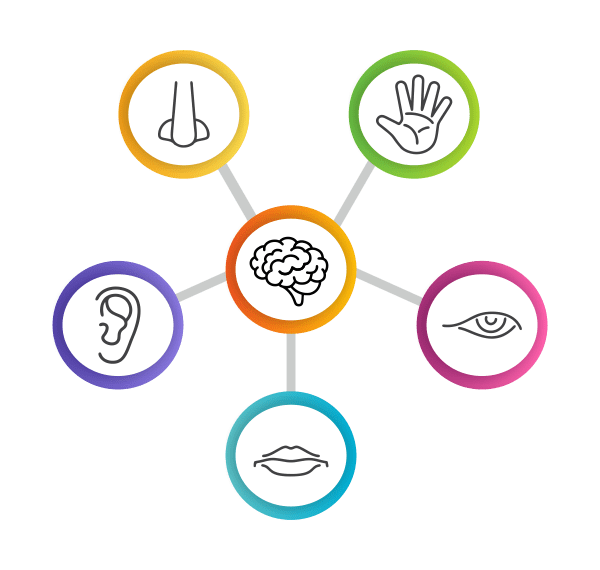
- will undergo sensory verification in the scope of taste, smell, touch and sight
- will be reminded of the ‘golden rules of a correct organoleptic evaluation’
- will independently and in a team perform correct organoleptic evaluations of products in accordance with the principles learned during the theoretical part (portfolio of products adapted to the needs and requirements of the Client: Client’s and/or competitive products). Focusing on the selected product category in order to increase knowledge in a given category and improve the assessment skills of people through continuous, in-depth training
UPCOMING TRAINING
ADDITIONAL INFORMATIONS