

Make better product decisions with sensory analysis (hands-on workshop for teams), Berlin
Make better product decisions with sensory analysis (hands-on workshop for teams), Berlin
1-day intensive training for R&D, QA, and Marketing. Learn to evaluate products objectively and align your team for faster, smarter decisions.
Quick Overview
For Whom:
R&D, QA, Marketing, Brand & Product Managers
Duration:
1 day (10:00–16:00)
Price:
800 EUR per participant
Group Size:
8–12 participants
About the Training
The Fundamentals of Sensory Analysis workshop is designed to introduce participants to the principles and key concepts of sensory analysis, teach how to conduct structured evaluations and tasting sessions, and assess each participant’s sensory sensitivity including an individual evaluation profile.
Why This Matters
Structured sensory analysis helps teams make faster, clearer, and more confident product decisions. By aligning R&D, QA, and Marketing on a shared sensory language, organizations can improve product quality, speed up development, and meet consumer expectations more reliably.
Business Relevance
In today’s competitive markets, product success is rarely determined solely by formulation or technical specifications. Many products fail not because they are poorly developed, but because teams lack a structured, objective way to evaluate sensory qualities — taste, aroma, texture, and overall experience.
When decisions rely on subjective impressions, internal discussions often become fragmented. R&D, quality assurance, and marketing may each use different criteria and terminology, leading to misalignment, slower decision-making, and costly product iterations.
This workshop addresses that challenge directly. By providing your team with structured sensory methodologies and a shared language, we enable faster, clearer, and more confident product decisions. Teams learn to detect subtle but critical differences in product attributes, align internally, and make choices backed by objective insight rather than intuition.
Ultimately, companies that integrate sensory analysis into their decision-making process gain:
- Faster product development cycles, with fewer revisions and delays
- More consistent product quality, aligned with consumer expectations
- Improved cross-functional collaboration, reducing internal conflicts
- Better market fit, leading to higher product adoption and consumer satisfaction
In short, this training transforms sensory evaluation from a technical exercise into a strategic business tool — helping your organization make smarter, faster, and more reliable product decisions.
A Hands-On, Decision-Focused Experience
This is not a passive learning session. The training is designed as an intensive, hands-on experience where participants actively engage with products through guided sensory exercises. They compare, analyze, and articulate differences in a structured way, developing both individual sensitivity and team-level alignment.
Through carefully designed exercises, participants begin to recognize subtle but critical distinctions in product attributes — distinctions that often determine consumer preference, yet remain unnoticed in untrained teams.
More importantly, they learn how to translate these observations into clear, actionable insights that support product development, quality control, and marketing decisions.
Workshop Schedule – Detailed Program
Introduction to Sensory Science:
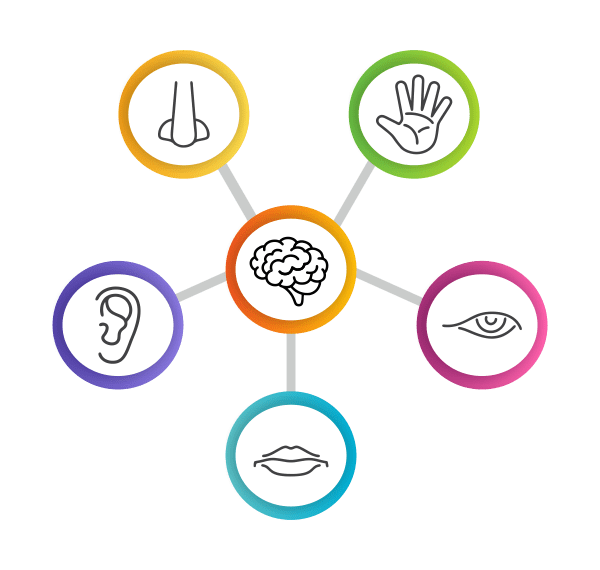
Understanding the human senses and their role in product evaluation. Participants will explore taste, aroma, texture, and visual perception.
Human Senses in Action:
Sensory tests to verify individual sensitivity, including taste, smell, and texture recognition. This allows participants to understand their own perceptual strengths.
Lunch Break:
Networking and informal discussions.
Basic Sensory Evaluation Techniques:
Learn structured methods for evaluating products, including scoring, ranking, and descriptive analysis. Participants practice techniques in small exercises.
Tasting Session Principles:
Overview of tasting session protocols and sensory evaluation rules. Includes preparation of samples and understanding factors affecting result reliability.
Hands-On Tasting & Sensory Evaluation:
Participants conduct guided tasting of 3–5 products, applying learned sensory evaluation methods. Includes structured comparison, scoring, and discussion of findings. Individual and group feedback provided to reinforce skills and create a shared sensory language across the team.
Wrap-Up & Takeaways:
Summary of key insights, practical application tips, and next steps for integrating sensory analysis into day-to-day product decisions.
Immediate Application to Business Processes
A key strength of this training lies in its immediate applicability. Everything participants learn is designed to be used directly in their day-to-day roles. Whether they are involved in product development, quality evaluation, or brand positioning, they leave the session equipped with practical tools that can be implemented without delay.
- Structured approaches to product evaluation
- Techniques for identifying and describing sensory attributes
- Methods for comparing products objectively
- Frameworks for aligning cross-functional teams
As a result, the training does not remain an isolated learning experience — it becomes an integral part of how teams work and make decisions.
What Sets This Training Apart
This workshop is positioned at the intersection of sensory science and business strategy. It emphasizes practical relevance, cross-functional impact, and decision support.
- Designed specifically for business environments, not academic settings
- Prioritizes application over theory
- Integrates perspectives from R&D, quality, and marketing
- Focuses on improving real decision-making processes
- Encourages active participation, critical thinking, and immediate feedback
What Your Team Will Gain
- Evaluate products using structured and objective sensory methods
- Detect subtle differences in taste, aroma, and texture with greater precision
- Identify potential quality issues earlier in the development process
- Communicate product characteristics clearly and consistently
- Contribute to faster, more aligned decision-making across teams
Beyond individual skills, the training strengthens the team as a whole — creating a more cohesive, aligned, and effective unit.
Business Impact
- Increased consistency in product quality
- Reduced number of late-stage product changes
- Faster product development cycles
- More effective cross-functional collaboration
- Stronger alignment between product design and consumer expectations
Ultimately, this leads to better-performing products and more confident strategic decisions.
Designed for Companies
This training is particularly valuable for organizations seeking to strengthen collaboration between departments and improve the quality of product-related decisions.
It is ideally suited for teams involved in:
- Product development (R&D)
- Quality assurance and control
- Marketing and consumer insights
- Brand and product management
The workshop can be delivered as a dedicated, in-company session, tailored to specific product categories and business objectives. Where relevant, participants may work with their own products or competitive benchmarks, further increasing the practical value of the training.
Why Choose Us
- Proven Expertise: Over 20 years of experience in sensory evaluation across FMCG, cosmetics, and consumer products.
- Business-Driven Approach: Training is tailored to your company’s specific challenges, ensuring immediate application and measurable outcomes.
- Hands-On, Practical Learning: Participants work directly with real product samples and practice structured evaluation methods, not just theory.
- Cross-Functional Alignment: We create a shared sensory language, improving communication and collaboration between R&D, QA, and marketing teams.
- Trusted by Leading Companies: Clients include top-tier organizations such as Unilever, Danone.
- Customizable for Your Needs: Every session can be tailored to your team size, product category, and strategic objectives, maximizing ROI.
Case Study: Sensory Workshop – Berlin (Pharma Company)
Client: Confidential pharmaceutical company
Participants: 12 cross-functional team members
Objective: Familiarize participants with structured sensory evaluation, train proper product assessment, and identify the best candidates for the company’s internal sensory panel.
- Hands-on sensory exercises with real samples
- Structured assessment sessions to practice evaluation skills
- Individual and group feedback to select top-performing team members
Outcome / Impact: Participants quickly adopted a shared sensory language, learned to objectively evaluate products, and strengthened cross-functional collaboration.

Investment
Participation starts from 800 EUR per participant, reflecting the depth of expertise, hands-on format, and immediate business applicability.
Fee includes hands-on exercises, structured evaluation frameworks, supporting materials, and expert guidance.
Frequently Asked Questions
Do participants need prior experience in sensory analysis?
No prior experience is required. The training is designed to accommodate both beginners and experienced professionals, with content adapted to the group’s level and background.
How practical is the training?
The workshop is highly interactive and hands-on. Participants actively engage in sensory exercises, product evaluation, and guided analysis throughout the session.
Who should attend from our organization?
For maximum impact, we recommend involving cross-functional teams, including representatives from R&D, Quality Assurance, Marketing, and Product Management.
Can the training be tailored to our specific products or category?
Yes. For in-company workshops, the content can be customized to reflect your product category, business challenges, and strategic priorities. It is also possible to work with your own products or selected benchmarks.
What is the recommended group size?
Typically between 8 and 12 participants. This allows for a high level of interaction, discussion, and individual feedback.
Is this available as a private workshop for our company?
Yes. The training can be delivered as a dedicated session for your organization, either on-site or in a selected location.
What materials or outputs will participants receive?
Participants receive practical frameworks, guidelines, and supporting materials that can be directly applied in their daily work.
⭐ Selected Client Perspectives
“This engagement brought a new level of rigor and consistency to our product evaluation process.”
“A highly effective framework that significantly improved cross-functional alignment.”
“We saw immediate impact in the way decisions are made — faster, clearer, and better grounded.”
“A rare combination of deep expertise and strong business relevance.”
View detailed references and selected case studies – TESTIMONIALS
Reserve Your Seat
Secure your spot now and give your team the tools to make better product decisions.
Or request a custom, tailored workshop
Ready to take your product decisions to the next level?
Sensory Workshop: Fundamentals of Sensory Analysis & Sensory Sensitivity Verification
This course is designed for professionals working with sensory analysis and its practical application across the organization — from product development to quality control and market execution.
Who It’s For (within your organization)
Ideal for:
- R&D / Product Development teams
- Quality Assurance departments
- Marketing & Consumer Insights teams
- Brand Managers
- Sales teams
- Factory staff responsible for organoleptic product evaluation
Most valuable for teams of 8–12 participants
What participants will learn
- Fundamentals of sensory analysis – definitions and terminology
- Principles of sensory testing and proper sample preparation
- Core sensory methods and their practical applications
- Designing product research plans combining sensory and consumer insights
- Recruitment and validation of sensory panels
- Tasting session structure and evaluation protocols
- Key factors influencing data reliability and result quality
Practical experience
- Participation in sensory tests verifying individual sensitivity (taste, smell, touch, vision)
- Independent evaluation of 3–5 products using professional sensory assessment methods
Hourly Schedule
- 10:00 - 11:00
- Sensory as science
- 11:00 - 12:00
- Human senses
- 12:00 - 13:00
- Lunch
- 13:00 - 14:00
- Basic sensory evaluation techniques and their applications
- 14:00 - 14:30
- Tasting session’s & sensory evaluation principles
- 14:30 - 16:00
- Product’s research plan